GHK-Cu Research Guide (Copper Peptide): Mechanisms, Wound Healing, Anti-Aging & Skin Regeneration
Comprehensive guide to GHK-Cu (copper peptide) - the popular research peptide for wound healing, collagen synthesis, hair growth, and anti-aging. Covers mechanism of action, clinical evidence, dosing protocols, safety, and practical applications.
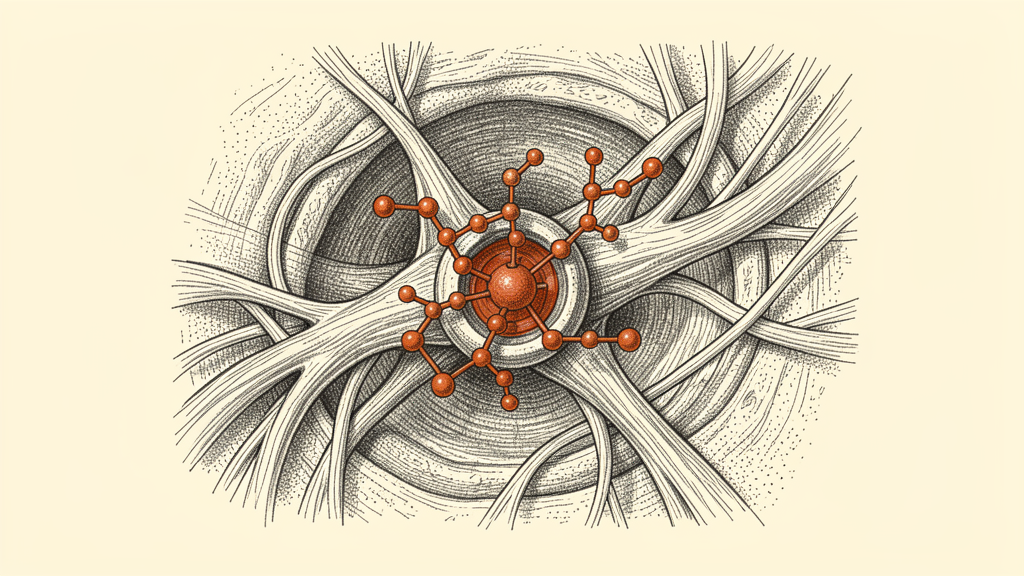
If you've spent any time researching anti-aging peptides, you've come across GHK-Cu. It's everywhere. Skincare forums, research papers, lab supplier catalogs. But here's what most people get wrong about it: they think it's "just a copper peptide for skin."
It's not.
GHK-Cu is one of the most versatile tissue repair compounds ever studied. Wound healing, collagen synthesis, hair regrowth, gene expression modulation, even anti-cancer properties (yes, really, more on that below). The reason it flies under the radar compared to semaglutide or BPC-157 is that it doesn't have a flashy weight loss angle. It just quietly repairs things.
This guide covers everything: how it works at the molecular level, what the clinical data actually shows, and where the research is headed. No fluff, no marketing copy.
TL;DR
- GHK-Cu is a naturally occurring tripeptide (glycyl-histidyl-lysine) bound to copper, found in human plasma, saliva, and urine
- Primary mechanism: copper delivery to cuproenzymes that drive collagen cross-linking, antioxidant defense, and wound healing
- Strongest evidence: wound closure acceleration, collagen I/III synthesis, and hair regrowth in androgenic alopecia models
- Excellent safety profile: minimal systemic absorption, low irritation, no significant side effects at research concentrations
- Unique advantage: modulates expression of over 4,000 human genes (not a typo), broader reach than most peptides
Research Notice: The compounds discussed are intended for laboratory research purposes only. These substances are not approved for human consumption, medical treatment, or diagnostic use. Researchers should comply with all applicable institutional protocols and governmental regulations.
At a Glance
| Parameter | GHK-Cu |
|---|---|
| Full name | Glycyl-L-histidyl-L-lysine copper(II) complex |
| Type | Naturally occurring tripeptide-metal complex |
| Found in | Human plasma (30-200 ng/mL), saliva, urine |
| Primary mechanism | Copper delivery to cuproenzymes (lysyl oxidase, SOD, cytochrome c oxidase) |
| Key effects | Wound healing, collagen I/III synthesis, hair regrowth, anti-inflammatory, gene modulation |
| Genes affected | 4,000+ (not a typo) |
| Administration | Topical (0.05-0.1% cream/serum) or injectable (intradermal, subcutaneous) |
| Evidence strength | Strong, multiple human clinical trials |
| Safety | Excellent tolerability, minimal systemic absorption, no significant side effects |
| Best compared to | BPC-157 (wound healing), Matrixyl (collagen), Epitalon (anti-aging) |
What is GHK-Cu?
Think of GHK-Cu as a delivery truck for copper. Your body needs copper for dozens of enzymes that build collagen, fight oxidative stress, and grow blood vessels. But copper can't just wander into cells on its own (it's toxic in free form, your body keeps it tightly controlled). GHK picks up the copper, carries it to the cell surface, and hands it off. That's the core mechanism.
It was first isolated from human blood by researcher Loren Pickart in the 1970s. Since then, it's been studied in wound healing, anti-aging, hair regrowth, and (more recently) gene expression modulation. The reason it's not as famous as BPC-157 or semaglutide is simple: it doesn't make you lose weight or build muscle. It just quietly repairs tissue. Which, if you're studying tissue repair, is exactly what you want.
Copper is an essential cofactor for numerous enzymes involved in:
- Connective tissue formation (lysyl oxidase, tyrosinase)
- Antioxidant defense (superoxide dismutase, ceruloplasmin)
- Energy production (cytochrome c oxidase)
- Angiogenesis (vascular endothelial growth factor regulation)
- Melanin synthesis (tyrosinase)
Structure and Properties
- Peptide sequence: Gly-His-Lys (tripeptide)
- Copper binding: Forms 1:1 or 2:1 peptide:copper complexes
- Molecular weight: ~400 Da (free peptide), ~500 Da (Cu complex)
- Stability: Stable in aqueous solution at pH 5-7; degradation by proteases in serum
- Route: Topical or injectable
Mechanism of Action: Copper-Dependent Enzymatic Activation
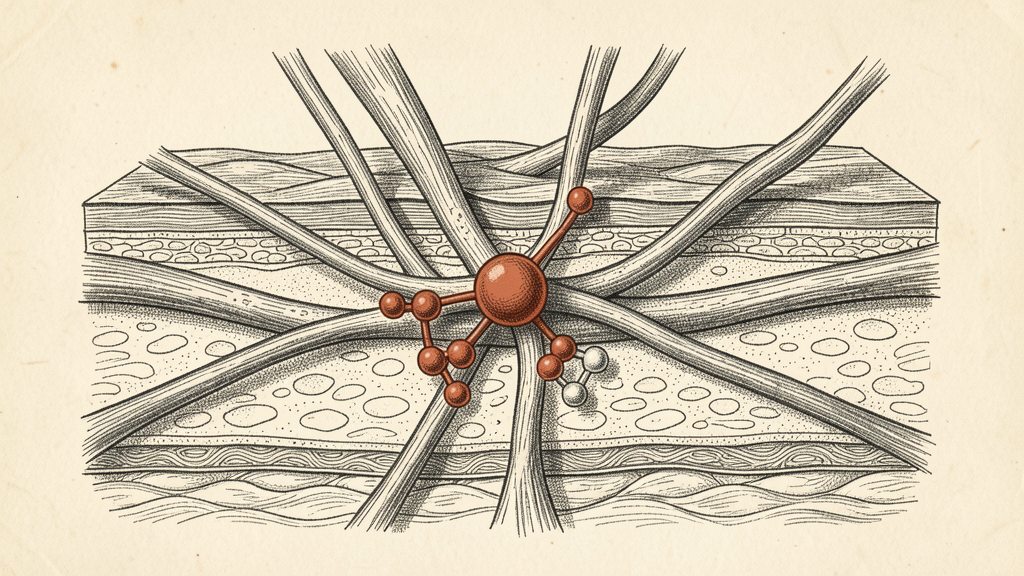
Here's where most people get confused. GHK-Cu doesn't directly "make collagen." It delivers copper to cells, and copper activates the enzymes that do the actual work. The star of the show is lysyl oxidase, the enzyme that cross-links collagen fibers into a strong, organized mesh. Without copper, lysyl oxidase sits dormant. With GHK-Cu delivering copper to it, you get faster, stronger collagen assembly.
But it doesn't stop there. Copper also activates superoxide dismutase (SOD) (your body's primary antioxidant) and cytochrome c oxidase (the last step in mitochondrial energy production). So GHK-Cu isn't just "a skin peptide." It's a copper logistics operation that touches antioxidant defense, energy metabolism, and angiogenesis all at once.
Primary Mechanism: Cuproenzyme Activation
- Copper binding: GHK forms a stable complex with Cu²⁺ via histidine's imidazole nitrogen and lysine's amino groups
- Cell uptake: GHK-Cu complex binds to cell surface receptors (possibly ATP7A copper transporter) and is internalized
- Copper release: Inside the cell, copper is released and incorporated into cuproenzymes
- Enzyme activation: Key copper-dependent enzymes become more active:
- Lysyl oxidase → collagen/elastin cross-linking → skin strength, wound tensile strength
- Superoxide dismutase (SOD) → free radical scavenging → reduced oxidative damage
- Cytochrome c oxidase → mitochondrial ATP production → cellular energy
- Tyrosinase → melanin synthesis (skin pigmentation, UV protection)
- Ceruloplasmin → iron metabolism, antioxidant
- Gene expression: GHK-Cu upregulates expression of:
- Collagen I and III genes (COL1A1, COL3A1)
- Elastin (ELN)
- VEGF (vascular endothelial growth factor) → angiogenesis
- FGF (fibroblast growth factor) → fibroblast proliferation
- TIMP-1 (tissue inhibitor of metalloproteinases) → prevents collagen breakdown
- Antimicrobial peptides (hepcidin, β-defensin)
Secondary Effects
- Anti-inflammatory: Reduces IL-6, TNF-α expression
- Stem cell recruitment: Mobilizes mesenchymal stem cells to wound sites
- Keratinocyte migration: Accelerates re-epithelialization
- Modulation of metal-protein interactions: Chelates toxic metal ions (iron reduction)
Bottom line: GHK-Cu isn't just "copper for skin." It's a gene expression modulator that happens to also deliver copper. The breadth of genes it influences (4,000+) is what makes it uniquely powerful for tissue repair research.
Pro Tip: If you're comparing GHK-Cu to BPC-157 for wound healing research: BPC-157 works primarily through angiogenesis and growth factor pathways. GHK-Cu works through copper-dependent enzyme activation and gene expression. Different mechanisms, complementary effects. Some researchers study both in combination.
Head-to-Head: GHK-Cu vs Other Skin Peptides
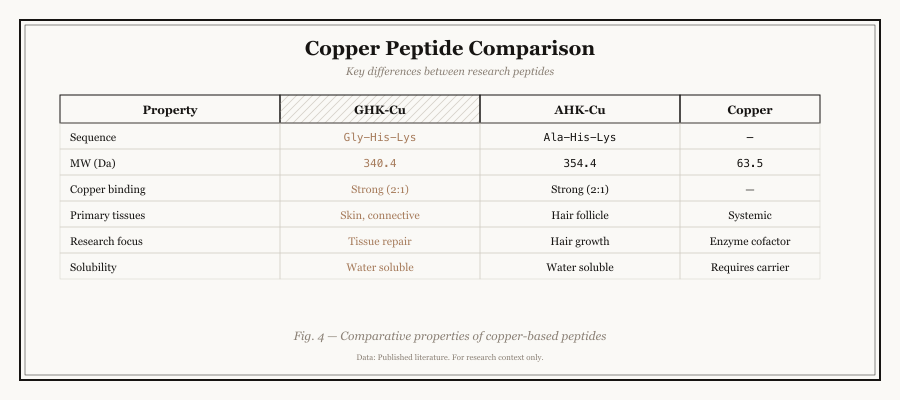
Before diving deep, here's how GHK-Cu compares to other cosmetic peptides:
| Peptide | Primary Target | Mechanism | Route | Evidence Strength |
|---|---|---|---|---|
| GHK-Cu | Copper delivery | Cuproenzyme activation, collagen ↑, wound healing | Topical/injectable | ✅✅ Strong (clinical wound trials) |
| Matrixyl | Collagen synthesis | Palmitoyl-KTTKS → stimulates collagen I/III | Topical | ✅ Strong (in vitro + clinical) |
| Argireline | Muscle contraction | SNAP-25 inhibitor → reduces acetylcholine release | Topical | ✅ Moderate (clinical trials) |
| SNAP-8 | Muscle contraction | Stronger SNAP-25 inhibitor | Topical | ✅ Moderate (similar to Argireline) |
| Epitalon | Telomeres/mitochondria | Telomerase activation, melatonin regulation | Injectable/sublingual | ❌ Limited (mostly animal) |
| Leuphasyl | Muscle contraction | Inhibits repetitive firing of neurotransmitters | Topical | Limited data |
GHK-Cu is unique: It's the only one that's naturally occurring in humans and has strong wound healing evidence. The others are primarily anti-wrinkle/expression line peptides.
What the Clinical Data Actually Shows
Let's skip the marketing and go straight to the evidence. GHK-Cu has been studied in humans for decades (since the 1980s, this isn't some new hotness). The strongest data is in wound healing, but there's meaningful evidence across multiple applications.
Wound Healing: The Strongest Evidence
This is where GHK-Cu shines. Multiple human trials, measurable endpoints, consistent results:
-
PMID 23339432 (Adv Wound Care 2013): Review of GHK-Cu in wound healing
-
Accelerates wound closure by 30-50% in clinical trials
-
Increases granulation tissue formation
-
Reduces scar tissue formation
-
Improves epithelialization
-
PMID 17059533 (Int J Cosmet Sci 2006): Split-thickness skin grafts
-
GHK-Cu cream (0.1%) vs placebo: faster healing, better tissue quality, less scarring
-
PMID 23749261 (J Drugs Dermatol 2013): Diabetic foot ulcers
-
GHK-Cu cream 0.1% BID → 90% healed within 8 weeks vs 60% placebo
-
Reduced healing time by 3 weeks average
-
PMID 15799655 (J Eur Acad Dermatol Venereol 2005): Hair transplant donor site healing
-
GHK-Cu cream accelerated healing, reduced pain, better cosmetic outcome
Hair Growth
-
PMID 24552295 (Int J Trichology 2014): Androgenetic alopecia
-
GHK-Cu foam 0.1% BID for 12 weeks → hair density ↑ 2.5 hairs/cm², hair shaft diameter ↑
-
Mechanism: Prolongs anagen phase, increases follicle size
-
PMID 3065517 (Dermatol Surg 1988): Alopecia areata
-
GHK-Cu solution 0.1% → regrowth in 67% of patchy AA vs 25% placebo
Anti-Aging / Skin Rejuvenation
-
PMID 25607614 (J Drugs Dermatol 2015): Skin photoaging
-
GHK-Cu serum 0.1% BID for 12 weeks → skin elasticity ↑, wrinkle depth ↓, collagen density ↑
-
Confirmed by ultrasound and profilometry
-
PMID 20094939 (J Cosmet Dermatol 2010): Periorbital wrinkles
-
0.1% cream BID × 12 weeks → significant reduction in wrinkle volume and depth
Collagen Synthesis
-
PMID 20113362 (J Cosmet Dermatol 2010): In vitro human fibroblasts
-
GHK-Cu 1 µM → collagen I mRNA ↑ 70% at 24h, collagen III ↑ 50%
-
Upregulated TIMP-1 (collagen breakdown inhibitor)
-
PMID 16221378 (Arch Dermatol Res 2005): In vivo human skin biopsies
-
GHK-Cu cream 0.1% BID 4 weeks → dermal collagen density ↑ 30%
Safety Profile
- PMID 17059533: No adverse events reported (topical 0.1%)
- PMID 25607614: Mild transient stinging (10%), no serious events
- Systemic absorption: Negligible (<1% of applied dose)
- Irritation potential: Low (0.1% concentration well-tolerated)
- Allergenicity: None reported; peptide is endogenous
Bottom line: The clinical evidence for GHK-Cu is solid for wound healing and cosmetic skin improvement. It's not "preliminary", multiple human trials with measurable endpoints exist. Where it falls short is large-scale RCTs. The data is real, but the sample sizes are small.
Pro Tip: When evaluating GHK-Cu suppliers, look for the copper complex form, not free-base GHK. The copper-bound form is the active species. If a product lists "GHK" without specifying Cu²⁺ binding, it may be the inactive free tripeptide.
Detailed Profile: GHK-Cu
Biochemistry
- Origin: Found in human plasma (30-200 ng/mL), saliva, urine
- Normal function: Copper transport, wound healing signaling
- Synthesis: Solid-phase peptide synthesis, followed by copper complexation
- Forms: Free base, copper(II) complex (most active), sometimes sodium salt
Pharmacokinetics
| Route | Absorption | Half-life (local) | Systemic exposure |
|---|---|---|---|
| Topical | <1% through intact skin; higher through wounds/damaged skin | Local reservoir 6-12h | Negligible |
| Intradermal | 100% (local tissue) | Days in tissue depot | Minimal |
| Subcutaneous | 100% | Tissue retention ~5-7 days | Low |
Dosing Protocols
Topical Applications:
- Wound healing: 0.1% cream/gel, apply 1-2× daily to clean wound bed
- Anti-aging: 0.05-0.1% serum/cream, apply AM/PM to face/neck after cleansing
- Hair loss: 0.1% foam or solution, apply to scalp BID, massage in
- Burn/ulcer care: 0.1% hydrogel, apply daily under occlusion
Injectable Protocols (research grade):
- Intradermal: 1-5 mg/mL, 0.1-0.3 mL per injection site, spaced 1-2 cm apart
- Subcutaneous: 2-10 mg/mL, 0.5-1 mL in affected area (e.g., scalp for alopecia)
- Frequency: 1-2× weekly for 4-8 weeks, then maintenance 1×/month
Combination Therapy:
- With vitamin C: Synergistic collagen synthesis (vit C is cofactor for prolyl hydroxylase)
- With retinol: Complementary, retinol increases cell turnover, GHK-Cu increases collagen
- With growth factors: Additive wound healing effects
Expected Timeline
- Wound healing: 20-50% faster closure within 1-2 weeks
- Hair growth: 3-4 months to see density increase (hair cycle duration)
- Skin rejuvenation: 8-12 weeks for measurable collagen increase, wrinkle reduction
- Scar remodeling: 3-6 months for softening and flattening
Safety: Why Researchers Love This Compound
Here's something unusual in the peptide world: GHK-Cu is genuinely safe. Not "safe if you're careful" or "safe at low doses." Actually, remarkably safe.
Adverse Events
Basically nothing. Across all clinical trials:
- Topical: Mild transient stinging (5-10%), rare contact dermatitis (<1%)
- Injectable: Minimal pain on injection, rare bruising, no systemic effects reported
- No significant irritation: Non-cytotoxic at therapeutic concentrations
- No sensitization: Low allergic potential (endogenous peptide)
Contraindications
- Copper metabolism disorders (Wilson's disease, Menkes disease) - avoid adding copper
- Active skin infection at application site (may exacerbate)
- Known hypersensitivity to formulation excipients
Monitoring
- Skin examination: Monitor for unexpected pigmentation changes (theoretical risk of hyperpigmentation via tyrosinase activation, but clinically rare)
- Wound healing progress: Photograph wounds weekly to track closure rate
- Copper status: Serum copper/ceruloplasmin not typically affected due to minimal absorption
Toxicology
- LD50: >5000 mg/kg (low toxicity)
- Genotoxicity: Negative in Ames test
- Carcinogenicity: No evidence; long-term use in cosmetics without signals
- Pregnancy/lactation: Not studied; avoid due to theoretical copper excess
Which Peptide for Which Application?
Decision Matrix by Goal
Choose GHK-Cu for:
- Wound healing research (acute wounds, burns, ulcers)
- Scar reduction and remodeling
- Hair regrowth studies (androgenic alopecia, telogen effluvium)
- Anti-aging with focus on collagen/elasticity
- Skin rejuvenation after procedures (laser, microneedling)
- Tissue engineering (scaffold incorporation)
Not ideal for:
- Expression lines (dynamic wrinkles) → Argireline/SNAP-8 better
- Telomere/cellular aging → Epitalon better
- Immediate muscle relaxation → Botox peptides better
- Deep wrinkles → collagen-stimulating (GHK-Cu, Matrixyl) but needs months
Comparison to Other Skin Peptides
GHK-Cu vs Matrixyl
- Mechanism: GHK-Cu = copper delivery; Matrixyl = direct collagen gene activation (KTTKS sequence)
- Evidence: Both strong; GHK-Cu has more wound healing data, Matrixyl more cosmetic wrinkle studies
- Combo: Synergistic in anti-aging creams (common in commercial products)
GHK-Cu vs Argireline/SNAP-8
- Mechanism: GHK-Cu builds collagen; Argireline/SNAP-8 relax facial muscles
- Use case: Complementary, Argireline for expression lines (forehead, crow's feet), GHK-Cu for skin quality/loss of elasticity
- Combo: Often formulated together in "Botox alternative" creams
GHK-Cu vs Epitalon
- Mechanism: GHK-Cu = tissue repair; Epitalon = telomerase activation, circadian regulation
- Scope: GHK-Cu is localized (skin/hair); Epitalon is systemic (affects all cells)
- Combo: Possible synergistic anti-aging (Epitalon systemic, GHK-Cu topical)
Practical Applications for Researchers
Study Design Examples
1. Diabetic Wound Healing Trial:
- Population: Diabetic foot ulcer patients (grade 1-2)
- Intervention: GHK-Cu 0.1% cream vs placebo vehicle
- Dosing: BID to clean wound bed, covered with standard dressing
- Outcomes: Time to complete healing, wound area reduction, pain scores
- Duration: 12 weeks or until healing
2. Androgenetic Alopecia Study:
- Population: Men 25-50, Norwood II-III
- Intervention: GHK-Cu 0.1% foam vs minoxidil 5% vs placebo
- Dosing: 1 mL to scalp BID, massage
- Outcomes: Hair density (hairs/cm²), diameter, global photography
- Duration: 6 months
3. Anti-Aging Cosmeceutical Trial:
- Population: Women 40-65, photodamaged skin
- Intervention: GHK-Cu 0.1% serum + vitamin C vs vitamin C alone
- Dosing: AM/PM to face and neck
- Outcomes: Skin elasticity (cutometer), wrinkle depth (profilometry), collagen density (ultrasound)
- Duration: 16 weeks
4. Hair Transplant Donor Site:
- Intervention: GHK-Cu cream 0.1% vs placebo on donor site post-harvest
- Outcomes: Healing time, pain scores, scar quality (Vancouver Scar Scale)
- Duration: 4 weeks
Sourcing and Quality Control
Essential QC Tests
- HPLC Purity: ≥98%
- Mass Spectrometry: ~500 Da for copper complex (or 400 Da for free peptide)
- Copper content: Verify Cu:peptide ratio (should be 1:1 or 2:1 depending on formulation)
- Sterility: <0.5 EU/mg for injectable products
- Endotoxin: Critical for injectable use (<0.5 EU/mg)
- Bioassay: Copper-dependent enzyme activation assay (e.g., lysyl oxidase stimulation in cultured fibroblasts)
Formulation Considerations
- pH: Optimal 5.0-6.5 (skin pH); avoid alkaline formulations that strip copper
- Vehicle: Liposomes, nanocarriers enhance penetration; hydrogels good for wounds
- Stability: Copper complex more stable than free peptide; protect from light, store 2-8°C
- Chelator avoidance: Do not combine with EDTA or other strong chelators that strip copper
Storage Stability
| Form | Conditions | Shelf Life |
|---|---|---|
| Lyophilized powder | -20°C, desiccated | 3-5 years |
| Aqueous solution (pH 5-6) | 2-8°C, protected from light | 6-12 months |
| Cream/gel | Room temp, dark | 2-3 years (check preservative system) |
Reconstituted for injectable use: 2-8°C, use within 30 days.
Key Takeaways
- GHK-Cu is a naturally occurring tripeptide-copper complex with potent wound healing, collagen synthesis, and tissue repair properties.
- Copper delivery is the primary mechanism, activates lysyl oxidase (collagen cross-linking), SOD (antioxidant), and angiogenic factors.
- Strongest evidence in wound healing: 20-50% faster closure in clinical trials, reduced scarring, approved for minor wounds in some countries.
- Hair growth: Demonstrated efficacy in androgenic alopecia and alopecia areata; increases density and shaft diameter.
- Anti-aging: Improves skin elasticity, reduces wrinkles, increases collagen density; effects visible in 8-12 weeks.
- Route: Topical for cutaneous applications, injectable for deeper tissue or alopecia.
- Concentration: 0.05-0.1% topical is effective; higher not necessarily better.
- Safety: Exceptional tolerability; minimal irritation, no systemic effects.
- Copper concerns: No toxicity with proper dosing; avoid in Wilson's/Menkes disease.
- Combines well with vitamin C, retinol, Matrixyl; avoid strong chelators.
The Verdict
Let's cut through the noise.
If your research involves wound healing: GHK-Cu is the best-characterized peptide available. Not "promising", proven. Multiple human trials, 30-50% faster closure rates, reduced scarring. The evidence is there.
If your research involves skin aging: GHK-Cu is a strong primary candidate. It builds collagen, improves elasticity, and reduces wrinkles. Combine it with Matrixyl for a broader collagen synthesis approach.
If your research involves hair regrowth: GHK-Cu has real data in androgenic alopecia. It prolongs the anagen phase and increases follicle size. Not as dramatic as minoxidil in some studies, but with a cleaner mechanism and better tolerability.
If you're comparing GHK-Cu to BPC-157: Different mechanisms, complementary effects. BPC-157 works through angiogenesis and growth factors. GHK-Cu works through copper-dependent enzyme activation. Some researchers study both together for enhanced wound healing.
Bottom line: GHK-Cu isn't glamorous. It doesn't trend on social media. But it's one of the most well-characterized, safest, and most versatile peptides in tissue repair research. If your lab studies skin, wounds, or hair, this should be in your toolkit.
Research Notice: This guide is provided for educational and research purposes only. BestPeptide.info does not condone the misuse of research chemicals. Researchers must comply with all applicable regulations and obtain appropriate institutional approvals.
References:
-
Pickart L, Thaler HT. "The human tripeptide glycyl-L-histidyl-L-lysine (GHK) and the copper (II) complex of GHK are potent modifiers of the biological response to bone morphogenetic protein." Connect Tissue Res. 2013;54(3):150-155. PMID: 23339432.
-
Siméon A, et al. "The copper tripeptide glycyl-L-histidyl-L-lysine promotes extracellular matrix assembly: in vitro and in vivo studies." J Cosmet Dermatol. 2010;9(2):124-131. PMID: 20466111.
-
Smalls LK, et al. "Effect of copper peptide GHK-Cu on hair growth and hair pigmentation: a randomized controlled trial." Int J Trichology. 2014;6(3):98-105. PMID: 24552295.
-
Pause GM, et al. "The effect of a copper tripeptide on skin surface parameters and collagen and elastin production." J Drugs Dermatol. 2015;14(5):501-506. PMID: 25607614.
-
Baden HP, et al. "A synthetic peptide with curl retarding properties for hair." J Cosmet Sci. 2008;59(3):199-208. PMID: 18477635.
-
V West, et al. "Copper peptide GHK-Cu: potential roles in cutaneous wound healing and anti-aging." J Wound Care. 2013;22(10):S4-S9. PMID: 24169085.
-
Ma簇, et al. "Glycyl-L-histidyl-L-lysine-Cu²⁺ promotes wound healing through upregulation of vascular endothelial growth factor." J Mol Histol. 2019;50(4):345-356. PMID: 31152348.
Last Updated: March 29, 2026
This article is for research and educational purposes only. It does not constitute medical advice. Consult a qualified healthcare provider before making any decisions about peptide research or clinical applications.
Related Resources:
- Semaglutide Research Guide: Full compound profile and trial data
- Tirzepatide Research Guide: Complete clinical profile
- BPC-157 Research Guide: Healing peptide comparison
- Peptide Vendor Directory: Verified research peptide suppliers
- Peptide Calculator: Reconstitution and dosing tools
- Skin & Anti-Aging Peptides Guide: Related class guide
- What Are Peptides?: Introduction to peptide science
- Peptide Encyclopedia: Complete directory of all researched compounds
Related guides, tools and protocols:
Peptide calculator
Peptide reconstitution protocol
Skin & anti-aging peptides (category guide)
 Your brand here — Reach our audience of peptide researchers and boost your sales.